
Maruti Suzuki India Limited
Maruti Suzuki India Limited Hiring Powertrain Quality Engineer Jobs in Gurgaon
Maruti Suzuki India Limited Recruitment 2026: An opportunity has been shared for Junior Engineer / Engineer positions in the Powertrain Quality – Plant Quality department at the Gurgaon plant. Candidates with relevant powertrain quality experience in an automobile OEM environment may be suitable for this position.
The opportunity is intended for experienced Diploma and B.Tech candidates who have worked in powertrain quality. Applicants should carefully review the experience criteria and industry requirements before sending their resumes.
Maruti Suzuki Recruitment 2026 – Job Details
- Company Name: Maruti Suzuki India Limited
- Department: Powertrain Quality – Plant Quality
- Designation: Junior Engineer / Engineer
- Job Location: Gurgaon Plant, Haryana
- Educational Qualification: Diploma / B.Tech
- Experience for Diploma Candidates: 3–6 years
- Experience for B.Tech Candidates: 2–3 years maximum, as stated in the notice
- Mandatory Experience: Powertrain Quality
- Industry Requirement: Automobile OEM candidates only
- Application Email: muskan.verma1@taggd.com
- Email Subject: Powertrain Quality – Gurgaon
Important: This vacancy information has been shared as a recruitment notice. Candidates should confirm the current vacancy status, eligibility and employment terms with the recruiter before applying.
Eligibility Criteria for Maruti Suzuki Powertrain Quality Jobs
Educational Qualification
Candidates with a Diploma or B.Tech qualification in a relevant engineering discipline may be considered, subject to the recruiter’s requirements. The original vacancy notice does not specify the accepted engineering branches, so applicants should confirm this before applying.
Work Experience
The experience requirements mentioned in the recruitment notice are:
- Diploma candidates: 3–6 years of relevant experience.
- B.Tech candidates: 2–3 years of experience, with a maximum of 3 years specified.
- Powertrain Quality: Relevant experience in powertrain quality is mandatory.
Candidates should ensure that their actual work experience matches the requirements rather than relying only on their total years of automotive industry experience.
Industry Experience
According to the shared notice, candidates from automobile OEMs only will be considered. Profiles from auto-component manufacturers, ancillary industries and non-automotive industries are stated to be ineligible.
Applicants currently working in supplier quality, manufacturing quality or another automotive function should confirm whether their specific experience meets the OEM and powertrain quality requirements.
Key Responsibilities in Powertrain Quality
The original notice does not provide a detailed job description. However, powertrain quality roles in automotive manufacturing commonly involve activities such as:
- Monitoring engine and transmission quality during manufacturing and assembly.
- Conducting inspections and supporting quality checks as per defined standards.
- Investigating defects, identifying root causes and coordinating corrective actions.
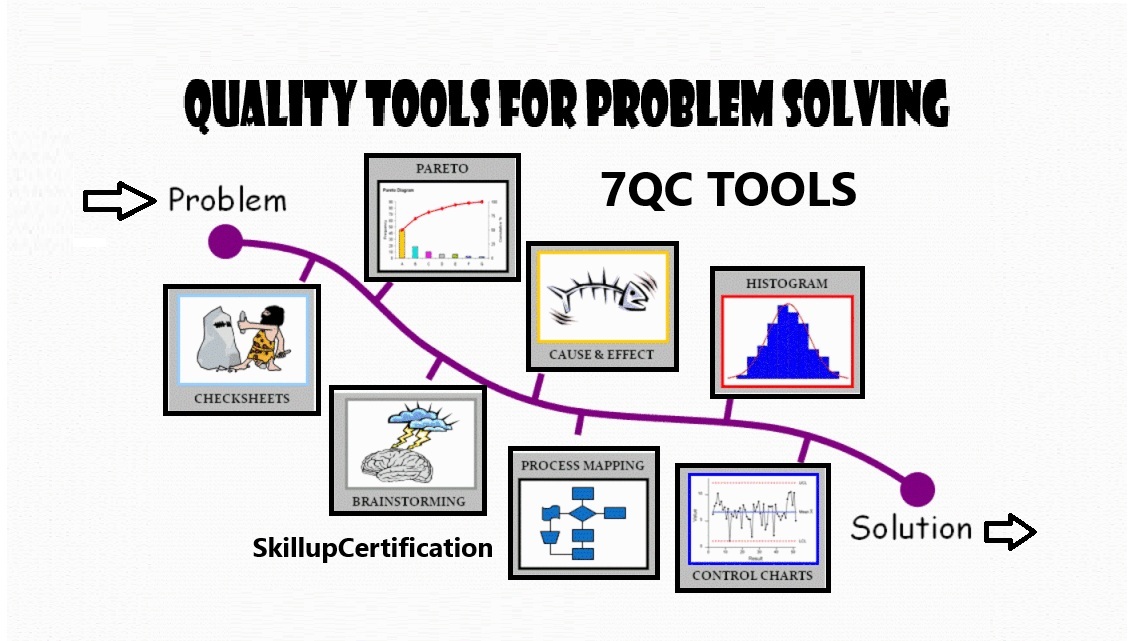
- Supporting problem-solving activities using methods such as 5 Why analysis and Fishbone diagrams.
- Monitoring process quality, rejection trends and defect recurrence.
- Coordinating with production, maintenance, supplier quality and other relevant teams.
- Maintaining inspection records, quality reports and corrective-action documentation.
- Supporting continuous improvement and prevention of quality issues.
These are typical responsibilities for this type of position, not confirmed duties from the specific vacancy.
How to Apply for Maruti Suzuki Powertrain Quality Recruitment 2026
Interested and eligible candidates can follow these steps:
- Update your resume with your current designation, engineering qualification and relevant powertrain quality experience.
- Highlight your automobile OEM experience and the quality activities you have handled.
- Mention measurable achievements, such as defect reduction, rejection improvement, process improvement or successful corrective actions, where applicable.
- Send your updated resume to the recruiter email address provided below.
- Use the exact subject line mentioned in the recruitment notice.
Recruiter Email: muskan.verma1@taggd.com
Email Subject: Powertrain Quality – Gurgaon
Candidates should avoid sending incomplete resumes and should verify the recruiter and vacancy details before sharing sensitive personal documents.
Interview Questions and Answers for Powertrain Quality Engineer
The following practice questions can help candidates prepare for an interview related to powertrain quality in an automobile manufacturing environment. Actual interview questions may differ.
1. What is powertrain quality in the automobile industry?
Answer: Powertrain quality refers to ensuring that components and systems responsible for generating and transmitting vehicle power meet the required quality, performance, reliability and safety standards. Depending on the vehicle, these may include the engine, transmission, clutch, drivetrain and related components. The objective is to prevent defects, reduce failures and ensure consistent product quality.
2. What are the major quality issues in an engine assembly?
Answer: Common issues may include incorrect torque, oil leakage, coolant leakage, abnormal noise, dimensional variation, improper assembly, component damage and performance-related defects. The actual defect categories depend on the engine design and manufacturing process. Quality teams use inspection, testing, process monitoring and root-cause analysis to prevent recurrence.
3. What is the difference between Quality Assurance and Quality Control?
Answer: Quality Assurance focuses on preventing defects by establishing effective processes, procedures and systems. Quality Control focuses on checking products or processes against defined requirements to identify nonconformities. In automotive manufacturing, both functions work together to maintain consistent quality.
4. Explain the 5 Why analysis method.
Answer: The 5 Why method is a root-cause analysis technique in which the team repeatedly asks why a problem occurred until the underlying cause is identified. The number of questions is not fixed at five. The investigation should be supported by evidence, and corrective actions should address the verified root cause rather than only the visible symptom.
5. What is an 8D problem-solving report?
Answer: The 8D method is a structured approach for resolving recurring or significant quality problems. Its stages generally include forming a team, describing the problem, implementing interim containment, identifying root causes, selecting permanent corrective actions, implementing and validating those actions, preventing recurrence and recognizing the team.
6. What is the difference between corrective action and preventive action?
Answer: Corrective action addresses the root cause of an identified nonconformity to prevent recurrence. Preventive action, in the traditional quality-management sense, addresses potential problems before they occur. Modern management systems also emphasize risk-based thinking and proactive improvement.
7. What is Poka-Yoke?
Answer: Poka-Yoke means mistake-proofing. It involves designing a process or device so that an error is prevented or immediately detected. Examples include fixtures that allow a component to be fitted in only the correct orientation, presence sensors and interlocks that prevent an incorrect assembly sequence.
8. What is the role of SPC in automotive quality?
Answer: Statistical Process Control uses data and control charts to monitor process variation over time. It helps identify unusual changes in a process before they lead to widespread defects. Control limits are calculated from process data and should not be confused with customer specification limits.
9. What is the difference between Cp and Cpk?
Answer: Cp measures the potential process capability by comparing the specification width with the process spread. Cpk also considers how well the process is centred within the specification limits. A process can have a good Cp but a lower Cpk if its average is shifted toward one specification limit.
10. How would you handle a critical defect detected on the production line?
Answer: I would first follow the plant’s escalation and containment procedure. This may include stopping or controlling the affected process, identifying and segregating suspect material, tracing affected lots, informing the responsible teams and assessing whether already-produced parts are affected. After containment, I would support root-cause analysis, implement corrective actions, validate effectiveness and ensure documented closure before normal production resumes under the applicable authorization process.
11. What is the purpose of a control plan?
Answer: A control plan defines the controls required to maintain product and process quality. It typically identifies process steps, product or process characteristics, specifications, measurement methods, sampling frequency, control methods and reaction plans. It helps ensure that critical characteristics are monitored consistently during production.
12. How do you reduce repeated defects in manufacturing?
Answer: I would analyse defect data to identify trends, verify the problem at the actual process, determine the root cause using evidence, introduce containment and corrective actions, and monitor results. I would also review standard work, control plans, training, equipment condition and mistake-proofing requirements to prevent the same problem from recurring.
13. What is FMEA, and why is it important?
Answer: Failure Mode and Effects Analysis is a systematic method for identifying potential failure modes, their effects and causes, and actions to reduce risk. It supports preventive quality planning by helping teams prioritize risks and improve product design or manufacturing processes before failures occur.
14. How do you manage a disagreement between production and quality teams?
Answer: I would review the applicable specifications, inspection results, process data and customer requirements. I would explain the risk using objective evidence and work with production to establish an appropriate containment and corrective-action plan. The priority would be product conformity and customer protection while minimizing unnecessary production disruption.
15. Why do you want to work in powertrain quality at Maruti Suzuki?
Sample answer: I want to develop my career in automotive manufacturing quality and contribute to product reliability, process improvement and customer satisfaction. I am interested in working in a structured OEM environment where quality standards, problem-solving and continuous improvement are important. My experience and technical knowledge can help me contribute to the team’s objectives, provided my background matches the requirements of the role.
Candidates should adapt this answer to reflect their genuine experience and career goals.
Frequently Asked Questions (FAQs)
1. Is Maruti Suzuki hiring Powertrain Quality Engineers in Gurgaon?
A recruitment notice has been shared for Junior Engineer / Engineer positions in Powertrain Quality – Plant Quality at the Gurgaon plant. The current vacancy status should be confirmed with the recruiter.
2. What is the required qualification?
The shared notice mentions Diploma and B.Tech candidates. The accepted engineering branches should be confirmed with the recruiter.
3. How much experience is required for Diploma candidates?
The notice specifies 3–6 years of experience for Diploma candidates, along with mandatory powertrain quality experience.
4. How much experience is required for B.Tech candidates?
The notice specifies a maximum of 2–3 years for B.Tech candidates. Candidates should confirm the exact applicable experience range with the recruiter.
5. Is powertrain quality experience mandatory?
Yes. According to the shared recruitment notice, powertrain quality experience is mandatory.
6. Can auto-component or ancillary industry candidates apply?
The notice states that only automobile OEM candidates will be considered and that auto-component, ancillary and non-automotive industry profiles will not be considered. Candidates should confirm their eligibility directly with the recruiter.
7. What is the job location?
The stated location is the Gurgaon plant in Haryana.
8. Where should candidates send their resumes?
Candidates can send their resumes to muskan.verma1@taggd.com, using the subject line Powertrain Quality – Gurgaon. Verify that the vacancy is still open before applying.
9. What salary is offered for this position?
The recruitment notice does not mention salary, benefits or the employment type. Candidates should ask the recruiter for the compensation range and other employment details.
10. Is this a permanent job or a contractual position?
The shared notice does not specify the employment type. Applicants should confirm whether the position is permanent, contractual or through a recruitment partner.
Short Summary
Maruti Suzuki India Limited’s shared recruitment notice lists Junior Engineer / Engineer opportunities in Powertrain Quality – Plant Quality at the Gurgaon plant. Diploma candidates require 3–6 years of experience, while B.Tech candidates must meet the stated maximum experience criterion of 2–3 years. Relevant powertrain quality experience and an automobile OEM background are mandatory according to the notice.
Apply by email: muskan.verma1@taggd.com
Email Subject: Powertrain Quality – Gurgaon
Location: Gurgaon, Haryana
Note: Confirm vacancy availability, eligibility, salary and employment terms with the recruiter before applying.
To apply for this job email your details to muskan.verma1@taggd.com