

ENCO Engineers Combine Pvt. Ltd.
We’re Hiring: Senior SQA Engineer (Supplier Quality Assurance)
📍 Location: Dharuhera, Haryana
🏢 Company: ENCO Engineers Combine Pvt. Ltd.
🧩 Experience: 4–7 Years (Auto Components Industry)
ENCO Engineers Combine Pvt. Ltd. is expanding its Supplier Quality & Development function and is looking for a highly skilled Senior SQA Engineer to strengthen our supply chain performance. If you are passionate about supplier audits, defect reduction, incoming quality improvement, and ensuring a zero-defect ecosystem, this opportunity is for you.
🔧 Key Responsibilities
-
Conduct supplier process audits and review PFD, PFMEA, and Control Plans.
-
Validate PPAP, APQP, and complete supplier documentation.
-
Manage supplier non-conformities, drive CAPA implementation, and reduce defects.
-
Lead supplier improvement projects to enhance capability and quality compliance.
-
Monitor incoming quality performance, strengthen IQC systems, and support PPM improvement.
-
Collaborate closely with Purchase, Production, and Quality teams.
-
Manage supplier escalations and ensure timely issue closure and effectiveness.
🎯 Candidate Profile – What We’re Looking For
-
4–7 years of experience in Supplier Quality Assurance within auto components manufacturing.
-
Strong knowledge of IATF 16949, PPAP, APQP, SPC, and MSA.
-
Exposure to machining, sheet metal, weld shop, or plastics processes.
-
Excellent analytical ability, communication skills, and vendor management capability.
-
Ability to drive supplier improvement initiatives independently.
📌 Why Join ENCO Engineers?
-
Opportunity to work on major OEM supply programs.
-
Exposure to advanced QMS and Supplier Development practices.
-
High-growth learning environment with strong cross-functional support.
-
Play a key role in building a robust, zero-defect supply chain.
-
📩 How to Apply
Interested candidates can email their updated resume to:
📧 komal.saraswat@enco.in✅ Top 10 Interview Questions & Detailed Answers – Sr. SQA Engineer
1. What is your approach when conducting a Supplier Process Audit?
Answer:
My process audit approach includes:
-
Preparation
-
Review past NCs, PPM history, audit reports, and process flow.
-
-
On-Site Study
-
Verify PFD, PFMEA, Control Plan alignment with actual practice.
-
Check machine capability, poka-yoke, traceability, maintenance records.
-
Validate operator training, WI, and material handling.
-
-
Gap Identification
-
Note deviations, risks, and systemic issues.
-
-
Audit Rating & NC Preparation
-
Categorize NCs as Major/Minor.
-
-
Follow-up
-
Ensure CAPA within timeline with effectiveness verification.
-
This ensures process capability, compliance, and defect prevention.
2. How do you validate a PPAP submission from a supplier?
Answer:
PPAP validation includes:
-
Reviewing Part Submission Warrant (PSW)
-
Checking DFMEA, PFMEA, Control Plan
-
Verifying Process Capability (Cp/Cpk) reports
-
Checking Dimensional report, Material/Performance tests, and IMDS
-
Verifying Gauge R&R
-
Ensuring MSA, SPC, and packaging standards
-
Checking sample parts and verifying them against drawing
Approval is given only if the submission meets OEM/IATF requirements and satisfies performance criteria.
3. How do you handle supplier rejections and NC/CAPA closure?
Answer:
Steps:
-
Immediate containment at supplier & incoming
-
Perform Root Cause Analysis (5 Why, Fishbone, Why-Why)
-
Define Corrective & Preventive Action
-
Verify implementation & effectiveness
-
Track PPM and ensure no repeat occurrence
Timely escalation to management if supplier delays CAPA or repeated NCs occur.
4. What actions do you take to reduce Supplier PPM?
Answer:
PPM reduction measures include:
-
Monthly supplier performance review
-
Strengthening incoming inspection standards
-
Implementing error-proofing at supplier
-
Ensuring SPC controls on critical parameters
-
Line revalidation and capability enhancement
-
Training suppliers on APQP & IATF requirements
-
Setting target-based improvement plans
Focus is on preventive quality rather than reactive inspection.
5. How do you evaluate a supplier’s Process Capability?
Answer:
I verify Cp/Cpk values for critical & significant characteristics:
-
Cp/Cpk ≥ 1.67 for critical characteristics
-
Cp/Cpk ≥ 1.33 for standard characteristics
If below target:
-
Identify cause → tooling issues, measurement error, machine wear
-
Implement corrective action (tool change, setup optimization)
-
Re-evaluate after improvements
Capability ensures stable and predictable output.
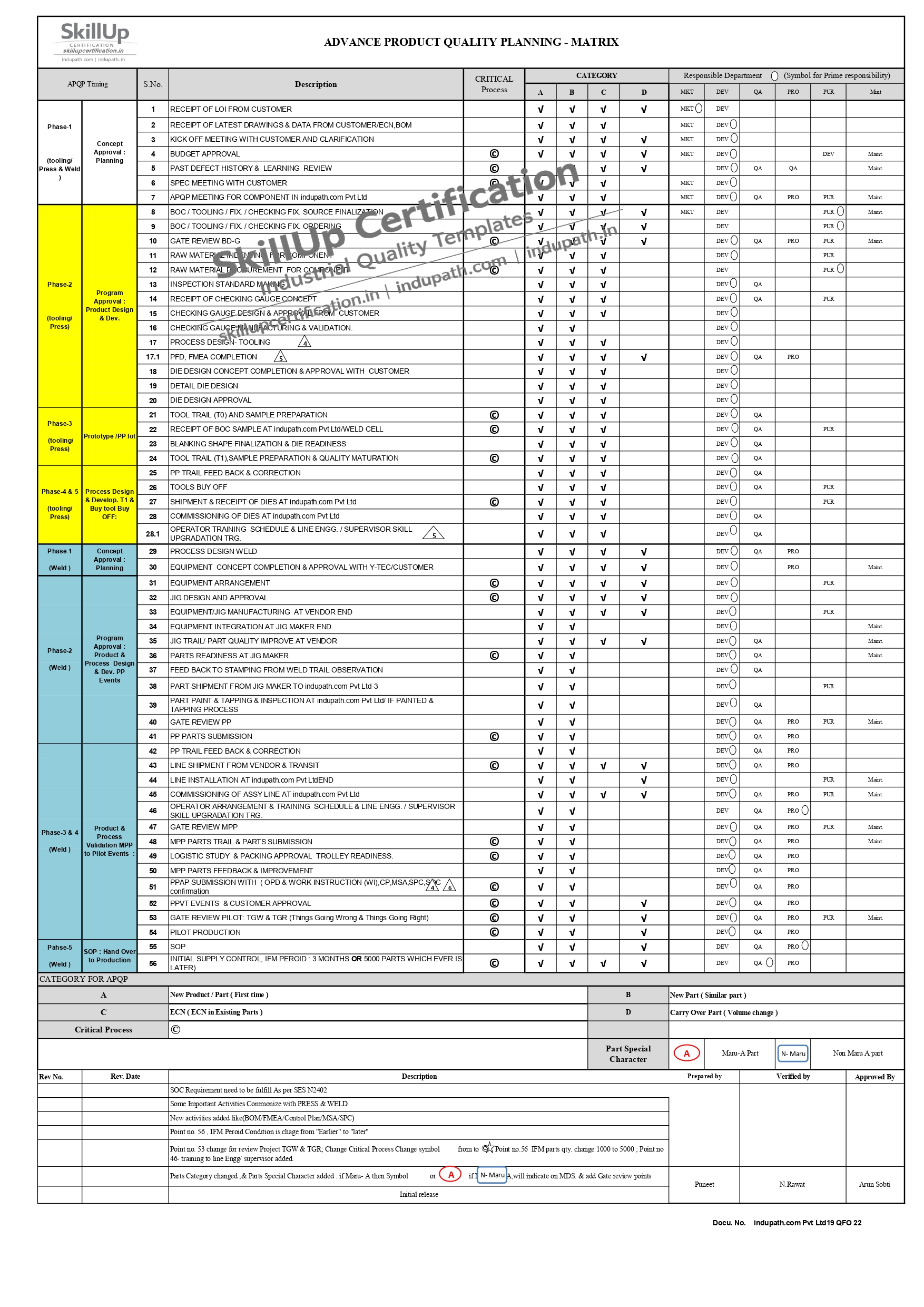
6. How do you ensure supplier documentation meets APQP requirements?
Answer:
I check:
-
PFD, PFMEA & Control Plan linkage
-
Special characteristics marking
-
Gauge selection & MSA status
-
SPC charts for key processes
-
Trial run data and packaging validation
-
Run@Rate results
APQP compliance ensures product readiness before SOP.
7. What is your approach for handling repeated supplier quality issues?
Answer:
-
Initiate Supplier Red Alert/Quality Hold
-
Conduct onsite deep-dive audit
-
Re-train supplier teams
-
Implement sorting + 100% inspection temporarily
-
Identify core systemic issues
-
Final closure only after capability studies and long-term fix
Focus on sustained improvement, not temporary correction.
8. What are common problems you face in machining or sheet metal supplier processes?
Answer:
Machining:
-
Tool wear, improper clamping
-
Incorrect cutting parameters
-
Variation in coolant
-
Dimension shift due to thermal conditions
Sheet Metal:
-
Springback issues
-
Weld penetration inconsistency
-
Burrs due to die wear
-
Thickness variation in raw material
SQA engineer must address these via tooling review, SPC setup, and revalidation.
9. How do you manage Incoming Quality Control (IQC)?
Answer:
-
Define AQL, sampling plan
-
Ensure instrument calibration
-
Verify material certificate, COA, COA
-
Maintain inspection records & traceability
-
Communicate rejections immediately to supplier
-
Implement skip-lot inspection for good-performing suppliers
IQC ensures right material at right quality.
10. Why is IATF 16949 important for Supplier Quality?
Answer:
Because it:
-
Maintains consistency in automotive quality systems
-
Ensures defect prevention
-
Focuses on risk-based thinking
-
Strengthens APQP, PPAP, SPC, MSA, and audit systems
-
Improves supplier capability and customer satisfaction
It is the backbone of maintaining a zero-defect supply chain.
-